


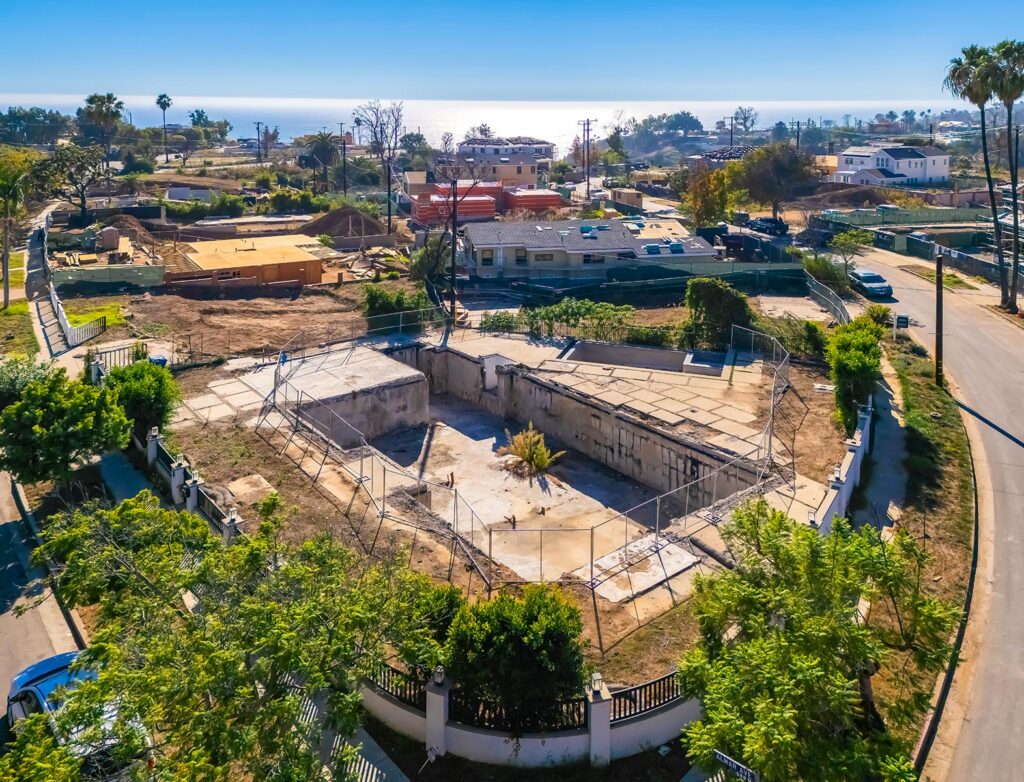
Tracking the Palisades Recovery: What 21 Months of Real Estate Data Tells Us
In the spring of 2025, the overriding sentiment surrounding Pacific Palisades real estate was apprehension. In the immediate aftermath of the devastating fires, many people expected local property values to undergo a complete collapse. Much of that fear stemmed from an anticipated surge of burned-property lots flooding onto the market all at once.
Predictions that 300 to 500 lots might be offered for sale during that precarious first year were not uncommon, fueling understandable concern that a massive imbalance between supply and demand could drive values sharply lower. But as we look at the data 21 months later, a remarkably different narrative has unfolded. That feared wave of inventory never materialized, and the market has instead demonstrated surprising resilience.
The Inventory Reality: From Bottleneck to Balance
There certainly was a substantial adjustment in the wake of the disaster; depending on location, lot values generally declined 30% to 50% from pre-fire levels. However, the number of properties offered at any one time remained far below what many analysts had expected, while buyer demand proved much more resilient than anticipated.
For historical perspective, during most of the decade from 2015 through 2024, the Palisades residential market typically operated with approximately three to five months of inventory. During that same decade, property values roughly doubled. The early post-fire lot market naturally bore little resemblance to those prosperous conditions. By April 2025, approximately 116 lots were available while only about five were selling each month—leaving the market with a sluggish supply of nearly two years at that pace.
Activity accelerated substantially as the year progressed. In the third quarter of 2025, 147 lots sold at an average of approximately $278 per square foot of land. In the fourth quarter, another 131 sold, averaging approximately $258 per square foot. As we enter October 2026, the frantic pace of that late-2025 surge has eased, but the market has settled into a far healthier balance. Approximately 150 lots are currently available, and sales have recently been occurring at roughly 32 per month. This translates to about five months of inventory—a level completely comparable to what the overall residential market typically saw before the fire.
Pricing Stabilization and the 2,200 Owners in Limbo
Just as notably, lot values have held in a fairly narrow range for about a year now. Recent sales have averaged around $270 per square foot, essentially in line with late 2025 figures. Of course, individual sales still vary enormously—ranging from approximately $50 to more than $500 per square foot—depending heavily on micro-location, views, specific lot characteristics, and buildability. The median lot sale price has recently hovered around $1.8 million.
Looking at the macro picture, approximately 700 of the roughly 4,200 properties where homes were destroyed have now changed ownership. While that absorption is significant, it also means more than 80% of those parcels have not traded hands. At the same time, rebuilding momentum has increased dramatically, with permit applications filed for approximately 1,850 properties. This includes possibly about 500 applications submitted by new owners who purchased their lots after the fire.
When you account for those new owners, the lots that have already sold, and the roughly 150 currently on the active market, that leaves approximately 2,200 original owners who have neither sold nor filed applications to rebuild. That specific group of 2,200 owners may represent one of the most important variables in understanding the future of the local market. Their eventual decisions will dictate the next wave of supply and rebuilding momentum.
The Hidden Markets: Damaged Properties and Turnkey Homes
There is another critical category that receives much less public attention. In addition to the thousands of homes that were completely destroyed, perhaps another 750 standing homes experienced varying degrees of fire, smoke, or water damage. Some of these structures may require substantial renovation before they can be safely occupied. Others may eventually be offered for sale at discounted prices reflecting the remediation work still required. Rather than appearing all at once as one large, disruptive block of inventory, however, these damaged properties are likely to enter the market gradually, which helps protect overall pricing stability.
The standing-home market presents still another part of the recovery story. Intact homes are in limited supply compared with pre-fire conditions, and they serve a highly motivated pool of buyers who want to return or move to the Palisades immediately without waiting several years to navigate the rebuilding process. The values and demand for these standing homes vary widely according to location, structural condition, surrounding neighborhood reconstruction activity, and the extent to which their specific areas were affected by the disaster.
The Road Ahead for Pacific Palisades
What happens next in Pacific Palisades will depend on a complex web of factors that cannot yet be measured with absolute confidence: the speed of local rebuilding, the resolution of ongoing insurance, tax, and financing issues, escalating construction costs, the personal decisions of thousands of individual property owners, and exactly how many former residents ultimately choose to return rather than sell.
What the data clearly shows, however, is that the enormous, market-crashing wave of selling that many feared simply did not occur. Hundreds of lots have been successfully absorbed, rebuilding activity has increased significantly, lot values have stabilized, and available inventory has moved back toward a historically normal relationship with the pace of sales.
Values have certainly not returned to their pre-fire levels, and the trajectory of recovery will continue to vary greatly from one neighborhood—and even one property—to another. But the marketplace has definitively moved beyond the period of extreme volatility and uncertainty that characterized the first months after the fire. Much of the Palisades’ story has yet to be written, as the decisions still ahead for thousands of property owners will shape both the real estate market and the rebuilt community for years to come. For now, the resilience of the market provides reasonable cause for optimism about the community’s long-term recovery.