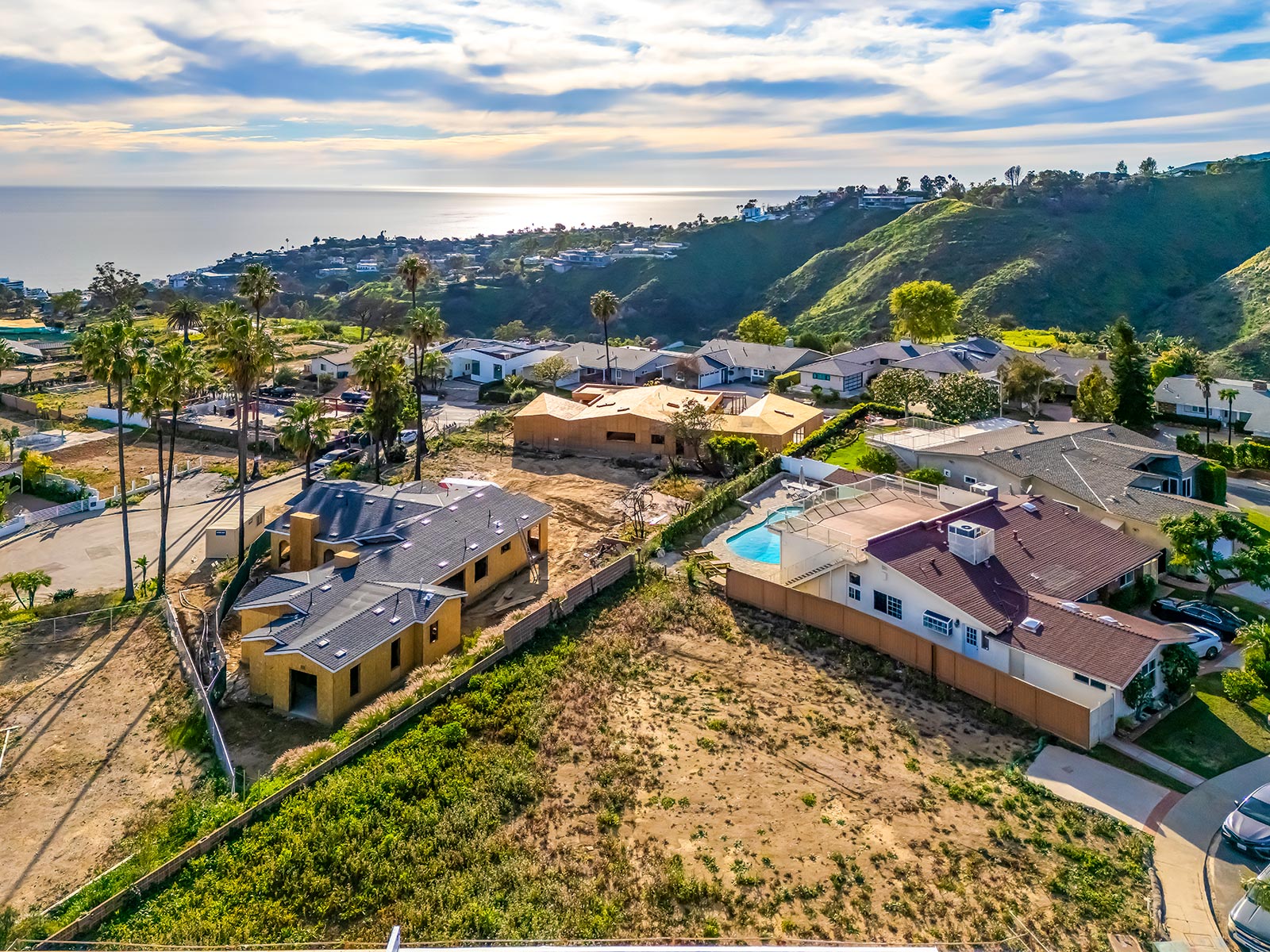
In a more typical market, the time-tested method of determining an optimal listing price is a detailed analysis of the most comparable properties that have recently sold. Ideally, there would be enough recent sales of similar lots within close proximity to guide valuation.
However, in today’s environment, the community’s 30 recent lot sales have been widely dispersed, with no single area having more than a handful of transactions. As a result, direct comparisons are often unreliable without adjusting for key variables like location, lot size, and view quality.
Some agents are maintaining close communication with others who have lots currently in escrow. This enables them to anticipate upcoming comparable sales, providing better insight into the latest market trends beyond the closed sales already on record.
Other Key Considerations:
- City-permitted square footage: It is crucial to find out the size of the burned structure previously permitted on the site. In many cases, a lot where a larger home existed enables faster approval for rebuilding — a major advantage for buyers.
- Buildable potential: Evaluating whether it would be practical and cost-effective to build up to 110% of the prior structure’s size can influence a lot’s desirability and thus its market value.
- Inventory analysis: With a surplus of lots on the market, studying active listings becomes another important tool. Factors such as days on market, how many relatively similar lots are available, and any special issues affecting unsold properties should all be part of a thoughtful pricing strategy.