The Market After the Fires: Lot Sales, Data Gaps, and Pricing Trends
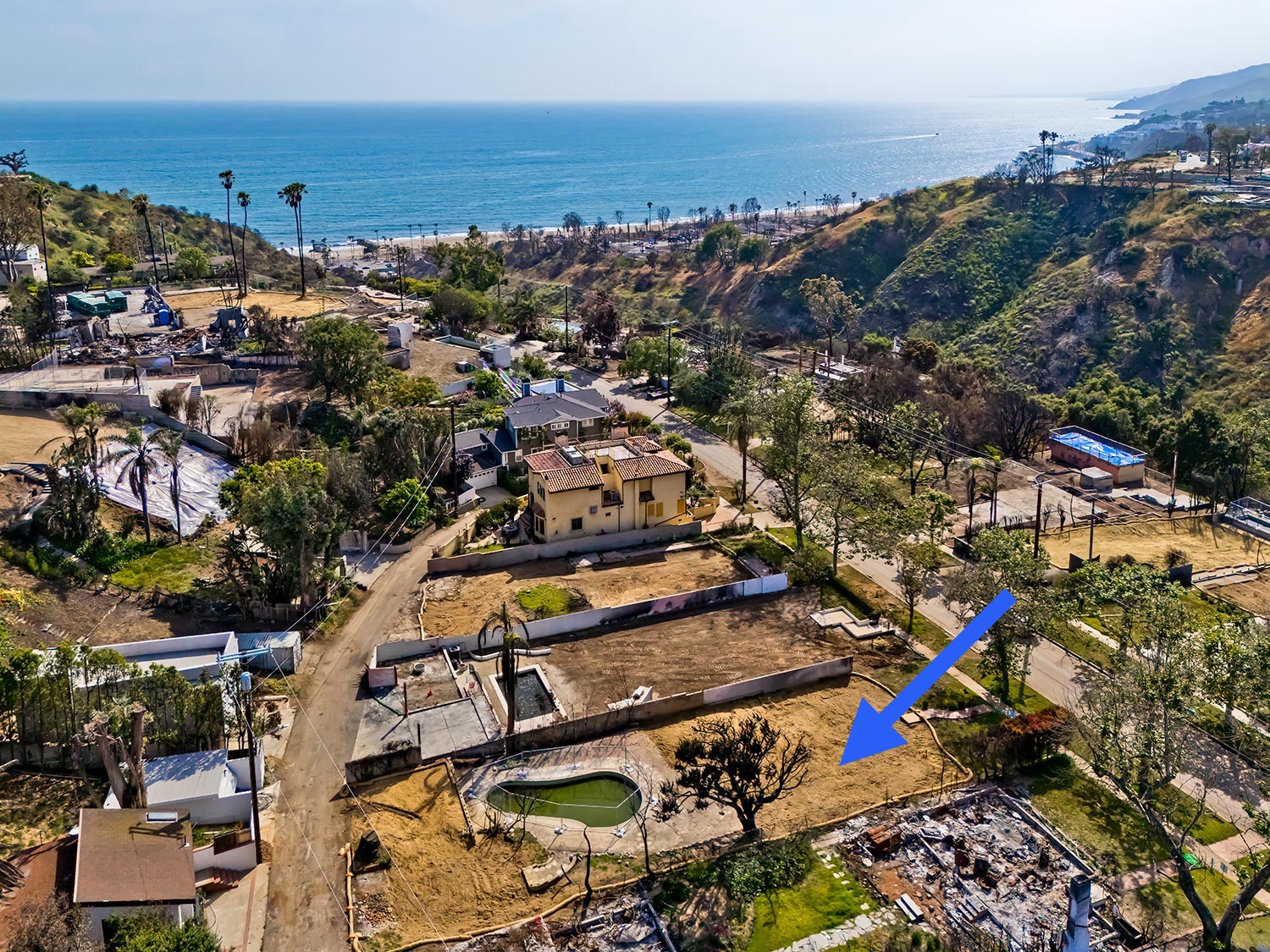
Seven months after devastating fires destroyed more than 60% of Pacific Palisades properties, the real estate market continues to evolve in unexpected ways. While some experts initially predicted 500-1,000 lots would hit the market by now, fewer than 400 have actually been listed for sale.
Adding to the complexity, various people are reporting conflicting statistics about market performance, creating confusion for buyers, sellers, and observers trying to understand market trends and property values.
Why Real Estate Statistics Differ
The methodology used to gather and analyze data significantly impacts results—and how those results should be interpreted. Here are the main sources of statistical variation:
Geographic Boundaries
Different analysts define “Pacific Palisades” differently:
- Broad approach: Some include all residential properties in public records—homes, condominiums, and lots
- MLS-based: Others use only properties technically classified as Pacific Palisades in the Multiple Listing Service, though many of these are actually in Santa Monica Canyon or Sunset Mesa
- Selective approach: Some exclude Canyon or Sunset Mesa sales entirely
Each method produces different numbers, making direct comparisons misleading.
Off-Market Sales Create Data Complications
Approximately 15% of sales occur “off-market” and aren’t initially entered into the MLS. When these sales are eventually added (within a month of county recording), they create statistical anomalies:
- Off-market sales appear in MLS data as single-family homes, regardless of whether they’re actually homes or vacant lots
- Without proper classification, a burned-out lot selling for $1,500,000 could be left out of lot sales statistics if it was listed under single-family home sales
Anomalies of Lot Sales Statistics
There will always be some listings in the MLS that can skew the data in significant ways, unless they are removed from the analysis. Examples include a several-acre lot that has been for sale for more than a year and never had a house on it, a former townhome listing that has listed the entire acreage of the development, substandard-size parcels on non-existent streets, etc.
Common Misinterpretations to Avoid
Average price per square foot isn’t predictive of individual property values. Land sales have ranged from under $100 to over $700 per square foot, depending on location, views, and usable space.
“Buyers’ market” doesn’t mean no competition. Despite current conditions, 35% of Palisades lots sold through MLS still received multiple offers.
Current Market Reality
The data reveals a market in transition:
- Price reductions are common: Over 30% of land listings have reduced prices, indicating sellers initially tested the market too aggressively
- Negotiation is expected: Average sales prices are running 10% below original list prices
- Competition still exists: More than one-third of lots still attract multiple bidders
The Importance of Consistent Methodology
While different statistical approaches will always yield different results, the most valuable insights come from consistent data collection and analysis over time. Whether an analyst includes Canyon properties or excludes off-market sales matters less than maintaining the same methodology month after month, allowing readers to track genuine market movements rather than statistical artifacts.
Making Informed Decisions
Understanding these statistical nuances is crucial for anyone buying or selling in the current market. Property owners considering a sale would do well to work with agents who:
- Have proven track records in the local market
- Understand current market dynamics beyond simple statistics
- Can interpret what the numbers mean for specific properties
- Have experience navigating weakening market conditions
In a rapidly changing market shaped by unprecedented circumstances, expertise and local knowledge matter more than ever.